RTDynamics // Simulation Library
EWAWS
Real-time, physics-based simulation library for sensor, electronic warfare, and weapon systems modeling.
C++ Library • VR-Forces Plug-in • DIS/HLA Compatible • Non-ITAR
Operational Advantage
Mission-Critical Simulation Fidelity
EWAWS delivers the electromagnetic environment and weapon dynamics modeling fidelity required for high-quality military training, mission rehearsal, and systems analysis.
Physics-Based Models
Radar equation, radiometric IR detection, atmospheric attenuation — every model is grounded in first-principles physics for operationally relevant training outcomes.
Fully Reconfigurable
GUI-based configuration editor with runtime C++ parameter modification. Model real-world EW equipment and weapons with production-grade fidelity.
Real-Time Performance
Multithreaded architecture delivers deterministic, repeatable simulation results at real-time frame rates across complex multi-entity scenarios.
Modular Architecture
Extensible model classes with plug-and-play composition. Integrate standalone via C++ API or deploy directly as a VR-Forces plug-in.
Operational Deployment
Trusted by Defense & Aerospace Worldwide
Since 2009, EWAWS has been integrated into live simulation programs across Ministries of Defence, prime contractors, and aerospace & defense organizations globally. Over 15 years of operational deployment and continuous development — customer identities are protected under confidentiality agreements.
Simulation Domains
Comprehensive Model Library
Ready-to-deploy, reconfigurable physics models spanning the full spectrum of sensor, EW, and weapons engagement simulation.
Radar Simulation
- Physics-Based Radar Model
- Radar Warning Receiver
- Noise Jammer Model
- Chaff Model
- Towed Decoy Model
- Radar Cross Section Model
IR Simulation
- IR Sensor Model (IRST, Missile Seekers)
- IR Emission Model (Multi-band, Directional)
- Directed Infrared Countermeasure (DIRCM)
- Flare Model (Burn Profile, Kinematics)
Laser Simulation
- Laser Designator Model
- Laser Sensor Model
- Laser Reflection Model
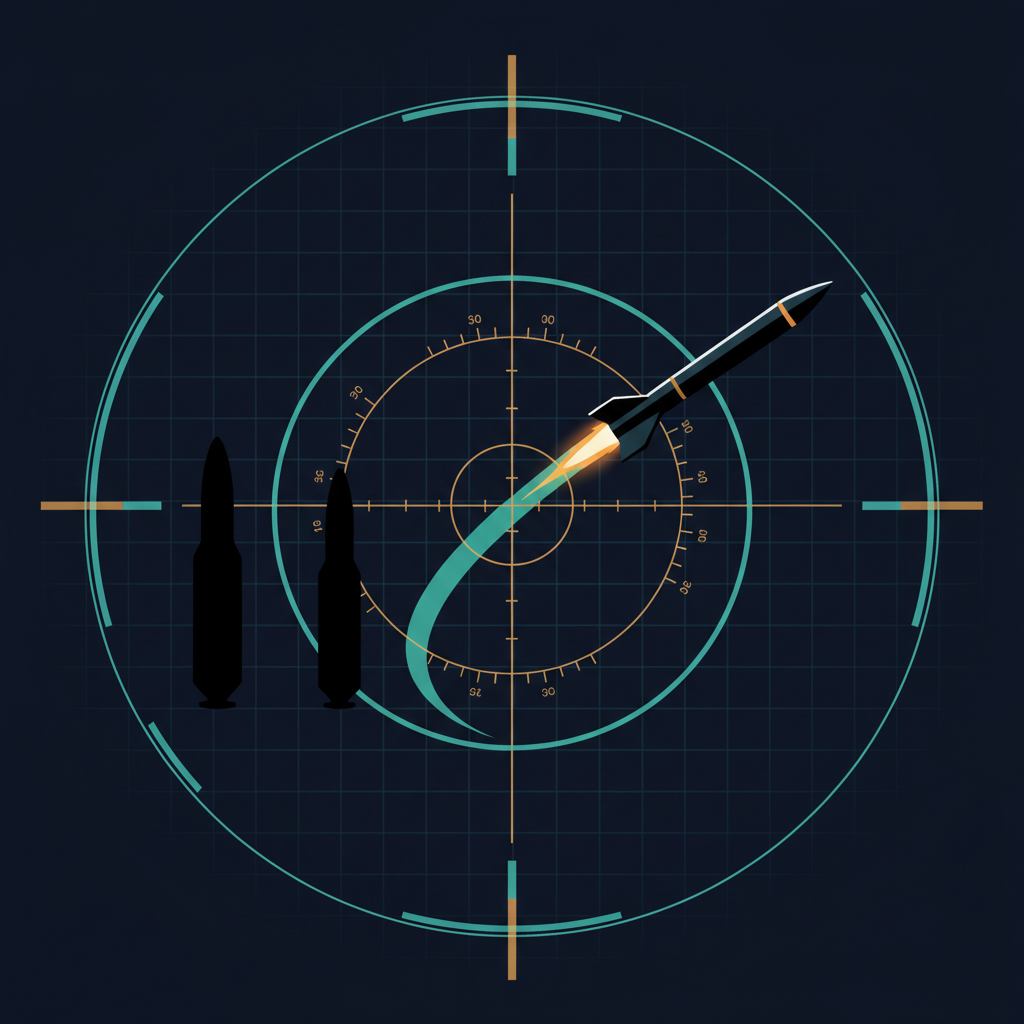
Weapon Systems
- Aerodynamics Model (Lift, Drag, Wave Drag)
- Propulsion Model (Jet Engine, Rocket Motor)
- Hypersonic & Ballistic Missile Dynamics
- Guidance Controller (Active, Semi-Active, Passive, GOLIS)
- Fuse Model (Proximity Detonation)
- Warhead & P(kill) Model
- Missile Approach Warning Sensor (MAWS)
Common Propagation Features
- Terrain-Aware Signal Propagation - all radar, IR, and laser models account for terrain occlusion and obstruction using user-supplied terrain data
- Atmospheric Propagation Effects - fog, smoke, rain, and obscurants attenuate radar, IR, and laser signals across all applicable sensor and weapon models
Force Generation
Example Systems & Platforms
Compose EWAWS models to replicate specific weapons systems, sensor suites, and EW payloads across air, ground, and naval domains.
Guided Missiles
Artillery
Bombs
Sensor Systems
Missile Seekers
Countermeasures
Stay Informed
Subscribe to the EWAWS Newsletter
Learn about EWAWS updates and modeling techniques.
Live Demonstrations
Applications
Recorded simulations showcasing EWAWS capabilities across engagement scenarios, sensor environments, and EW interactions.
An aerial engagement simulation powered by EWAWS and FixedWingLib CGF. IR missile and DIRCM, active/passive homing radar missile and jammers are demonstrated.
EWAWS midcourse data-link, terminal semi-active missile simulation in MAK Technologies VR-Forces. Features include AESA RADAR with time-shared search beams, missile data-link, real-time weapon range (R_min, R_aero, R_max, R_neverescape) computation and visualization
EWAWS midcourse data-link, terminal active missile simulation in MAK Technologies VR-Forces. Features include multiple target engagement, LAR visualization, HLA command guidance beam, targeting via data-link, and terminal phase active RADAR seeker.
EWAWS RADAR simulation in MAK Technologies VR-Forces, demonstrating how a simulated RADAR is affected by precipitation in a weather region.
Multiple RTDynamics products in MAK Technologies VR-Forces. Features include 4-ship formation CAP flying, autonomous beyond and within visual range air combat tactics, air-to-air missiles, and missile evasion maneuvers. All entities are CGFs running RTDynamics aerial engagement tasks.
Ballistic missile defence is one of the most demanding scenarios in modern defence simulation. EWAWS provides a physics-based environment to model ballistic missile fly-out, radar detection, tracking, and interception with high realism.
Read Blog Post →Technical Depth
Key Capabilities
Every model in the EWAWS library is engineered for physics-level accuracy.
Radar Equation Fidelity
Detection modeling with S/N ratio thresholds, Doppler filtering, frequency hopping, and automatically computed antenna gain patterns with sidelobes.
Radiometric IR Detection
Spectral radiant intensity distributions with 2D directional factors, multi-band seeker modeling, and centroid-based tracking with configurable burn profiles.
Multi-Mode Guidance
Active, semi-active, passive homing. Midcourse datalink with terminal active. GOLIS waypoint navigation. Proportional navigation with terrain following.
Full ECM/ECCM Chain
Jammer noise injection into radar receiver models. Chaff RCS schedules. Towed decoys with vulnerability models. DIRCM with threat detection via MAWS.
Environmental Effects
Atmospheric attenuation modeling: pressure, temperature, humidity. Weather states: rainfall, cloud coverage, fog/haze across all sensor domains.
Terrain Integration
Line-of-sight obstruction, background clutter modeling, clutter suppression for IR sensors, and terrain-following flight for cruise missile simulation.
Weapon Systems
Weapon Launch Procedure Simulation
EWAWS simulates the full weapon launch sequence for the most common missile guidance families, providing operationally realistic engagement timelines for training and mission analysis.
Radar Guided Missiles with Datalink
Active radar homing with mid-course datalink updates for beyond-visual-range engagement.
Semi-Active Radar Guided Missiles
Continuous wave illumination from launch platform with seeker tracking reflected energy.
Semi-Active with External Illuminator
Third-party illumination source enables off-boresight and cooperative engagement geometries.
IR Guided Weapon Launch
Infrared seeker acquisition, lock-on before/after launch, and all-aspect engagement modeling.
Laser Guided Weapon Launch
Spot tracker guidance with coded laser designator handoff and terminal phase homing.
Air-to-Ground Anti-Radiation Missile
ARM launch with or without RWR-based initial targeting, home-on-jam, and memory guidance modes.
GOLIS
Go-to-Location-In-Space (GOLIS) guidance simulation — inertial mid-course navigation to a pre-designated spatial coordinate with terminal phase handoff.
Deployment Options
Integrate With Your Simulation Environment
EWAWS is available as a standalone C++ library for custom integration, or as a turnkey VR-Forces plug-in. Extensible model classes and a comprehensive C++ API enable custom guidance algorithms, sensor models, and engagement logic.
GUI Configuration Editor (RIME) — Visual parameterization of all models with curve editors and data tables
LAR Generator Add-On — Automated launch acceptability region computation with multidimensional output tables
ESA Radar Add-On — Mode interleaving, time-shared search/track, concurrent multi-beam operation
C++ Libraries
Windows & Linux
VR-Forces Plug-in
No programming required
DIS/HLA
Distributed simulation
Lua Scripting
VRF plan files & scripts
Deterministic
Repeatable results
State Save/Load
Scenario snapshots